


ます : No meaning
Note : It is used to indicate the present tense politely.
|
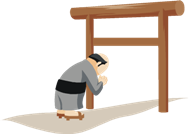
Japan is a polite country and They even change a verb at the end of a sentence into For example, eat is たべる if you look up in a dictionary, |
 |
Task 1 : Answer the stem form of the verbs below.
- 食(た)べる
- 見(み)る
- 行(い)く
- 起(お)きる
- 飲(の)む
- 書(か)く
- 勉強(べんきょう)する
- 寝(ね)る
- 読(よ)む
- 学(まな)ぶ
Task 2 : Change into English.
- 私 は 朝 シリアル を 食べ ます。
- 私 は 学校 で 日本語 を 勉強し ます。
- 父 は 車 で 仕事 に 行き ます。
- 母 は 毎日 八時 に 起き ます。
Task 3 : Change into Japanese, using ます.
- I eat breakfast every day.
- My uncle goes to Japan next year.
- My father swims in a pool on Wednesdays.
- My younger sister reads books in a library.
Answer
Task 1 :
- 食(た)べ
- 見(み)
- 行(い)き
- 起(お)き
- 飲(の)み
- 書(か)き
- 勉強(べんきょう)し
- 寝(ね)
- 読(よ)み
- 学(まな)び
Task 2 :
- I eat cereal in the morning.
- I study Japanese at school.
- My father goes to work by car.
- My mother wakes up at 8 every day.
Revise Translation rule (Japanese to English) 
Task 3 :
- 私 は 毎日 朝ごはん を 食べ ます。
- 叔父 は 来年 日本 に 行き ます。
- 父 は 水曜日 に プール で 泳ぎ ます。
- 妹 は 図書館 で 本 を 読み ます。



